There are experiences that become etched into the flesh. They can't be filed away in the mind, but reside in the nervous system – as persistent tension, as jumpiness, as the feeling of never truly being able to arrive. Trauma isn't what happened to you. Trauma is what your body still experiences as a threat in the here and now.
This realization has fundamentally changed the way we work with traumatized people in recent decades. And it explains why bodywork – good, mindful, trauma-informed bodywork – can help where talking alone reaches its limits.
Why trauma is stored in the body
Dr. Peter Levine, developer of the Somatic Experiencing method, observed that animals in the wild rarely remain traumatized – even though they are regularly exposed to life-threatening situations. The reason: After the shock, they release the mobilized survival energy through trembling, shaking, and exhaling. Humans have lost this ability. We hold onto the energy – it remains trapped in the nervous system.
The result is a system stuck in a state of alert: chronically tense, hyperactive, or, conversely, deeply frozen. Physical symptoms, persistent anxiety, sleep problems, irritability, numbness – these are not character flaws. These are signs of a nervous system that never had the chance to fully process the shock.
How bodywork is incorporated into trauma integration
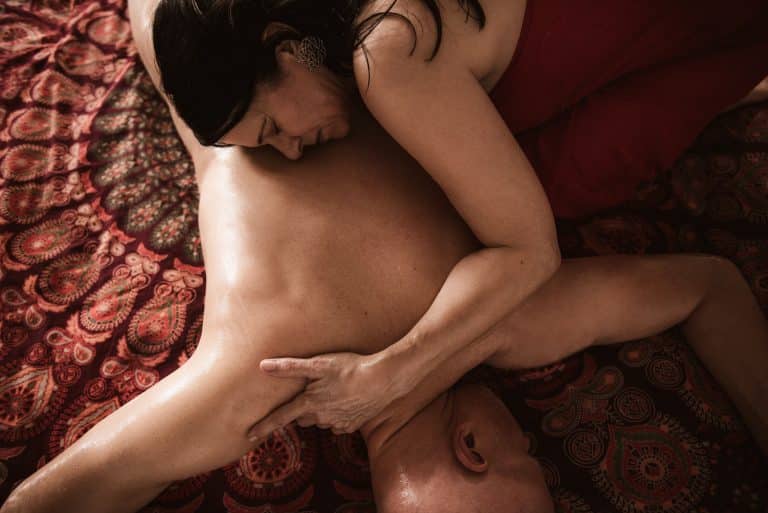
Mindful bodywork – as we practice it in our clinic – is not a substitute for therapy or a medical procedure. It is a space where the body can have new experiences: touch that is safe, boundaries that are respected, and activation that is allowed to release.
What happens has a physical quality: some guests experience sudden trembling, deep breathing, or tears that come for no apparent reason. This isn't being overwhelmed—it's a release. The nervous system is doing what it wasn't allowed to do back then.
What "trauma-informed" means in our practice
Working with trauma-informed awareness doesn't mean that every session is trauma work. It means that we recognize the possibility that old stories reside within a body, and that we proceed accordingly.
Transparency: We explain what we do – before, during, and after.
Consent: Every touch, every change will be announced or requested.
Natural speed: There is no schedule. The body determines the pace.
Resource orientation: We work from a position of stability – never against resistance.
Follow-up support: After intensive sessions, reflection and re-anchoring are essential.
Bodywork as a complement – not as a replacement
We want to be honest: Bodywork is not therapy and is not a substitute for psychotherapeutic support. In cases of complex trauma, PTSD, or serious mental illness, we always recommend additional support from licensed professionals. What bodywork can do: bridge the gap between understanding and feeling, between what you know and what is ready to change.
→ Would you like to learn more or arrange an initial consultation? Simply write to us via our Contact page- we look forward to seeing you.
Frequently Asked Questions (FAQ)
No. You can tell us whatever you want. We never ask for details. What matters is your current situation and your request.
That's possible. That's why we work carefully and with a focus on resources. If something arises that requires more support, we'll say so directly.
Please describe this in the preliminary discussion. We will clarify together what is possible and makes sense.