Many couples know this feeling: You sit across from each other, explaining and explaining. The other person nods. And yet nothing changes. The distance remains. The old argument returns. So does the feeling of not truly being heard.
Traditional couples counseling works with words – and that's good. But there's another level to it.
Relationships that run deeper than arguments and communication rules: the physical level. The way you position yourselves in space. How tension is triggered in the other person before a word is spoken. How one body reacts to the other's – in love and in conflict.
Modern couples coaching with somatic tools works precisely here.
What somatic tools mean in couples therapy
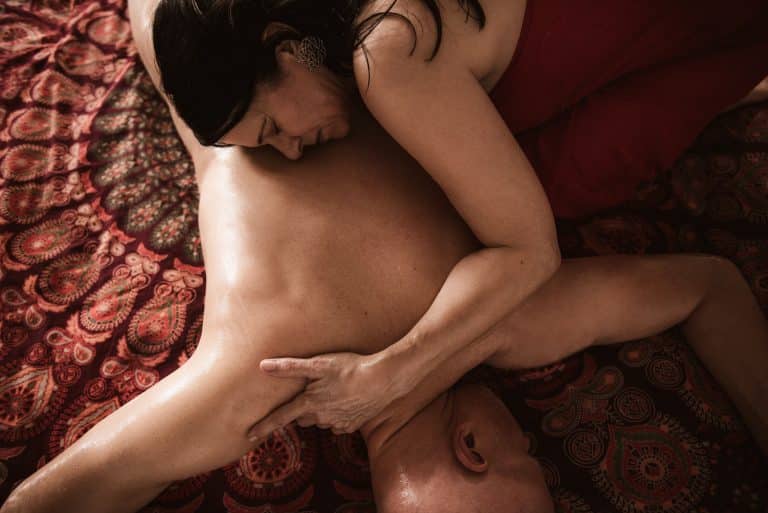
Somatic – that means: body-oriented. In couples therapy, this doesn't mean that couples are massaged together (although that is an optional extra in our services). It primarily means that body signals are incorporated into the work:
Breathing changes during conversation – when does someone hold their breath?
Posture and muscle tone – how does body tension change when a specific topic is discussed?
Proximity and distance – how much physical contact feels?
Calming rituals – how can the couple's nervous system be regulated together?
This level is not additional. It is often the key.
Why body and relationship are inseparable
Pair bonding is a physical phenomenon. The bonding hormone oxytocin is released through touch. The nervous systems of two people who are close synchronize—a process described by the polyvagal theory: co-regulation, the calming effect of the other. When a couple lives apart or in constant conflict, they not only lose their emotional connection—they also lose physical co-regulation.
This explains why deep connection is so difficult to re-establish through conversation alone. The body needs to have the new experience – to feel safety in the other person, not just to know it.
What somatic couples coaching looks like with us
In our practice, we use a typical approach in couples therapy: We have an open conversation – and simultaneously listen to what the bodies are telling us. We sometimes pause and ask: What do you feel physically right now? What changes when you look at your partner?
In addition, there are simple but powerful physical exercises: shared breathing sequences that calm the nervous system; exercises in conscious body contact that rebuild trust in being touched; movement sequences that physically interrupt ingrained dynamics.
Who is this right for?
Couples who feel that conversations alone no longer get through to each other
Couples who want to overcome physical distance – after illness, loss, or simply after years of routine
Couples who want to deepen and consciously shape their intimacy and sensuality
Couples who are in crisis and desperately want to feel something – not just talk about it
→ Would you like to learn more or arrange an initial consultation? Simply write to us via our Contact page- we look forward to seeing you.
Frequently Asked Questions (FAQ)
Couples therapy addresses mental health issues and deep-seated trauma – and requires licensed therapists. Couples coaching is for couples who want to grow, learn, and deepen their connection. The two complement each other well.
It helps if both people are open. But often it's enough if one person initiates the process – and we discuss beforehand what works best.
That's not unlikely – and it's valuable. Experiencing live conflict in a safe environment is often the most instructive thing a couple can learn.